-
Establish Broader
Perspective. Motivate Fundamental Innovation.
STRENGTHENING INTERNATIONAL ALIGNMENT IN QUALITY ASSURANCE: INTERNATIONAL OBSERVATION AND EXCHANGE UNDER THE 2025 INTERNATIONAL INTERNSHIP PROGRAM
2025-10-17The Taiwan Assessment and Evaluation Association (TWAEA) has long been committed to advancing professional development in higher education quality assurance and has maintained strong and substantive partnerships with the Japan University Accreditation Association (JUAA) and Thailand’s Office for National Education Standards and Quality Assessment (ONESQA). Building on this collaboration, the three agencies jointly launched the second round of the International Internship Program in 2025, hosted by JUAA, reflecting a shared commitment among Asian quality assurance agencies to deepen international exchange and cooperation.
The program adopts a blended format combining online learning and on-site observation. In the initial phase, online sessions introduce Japan’s higher education system, quality assurance framework, and JUAA’s accreditation mechanisms. The on-site phase focuses on observing institutional accreditation and program-level accreditation practices, enabling international interns to move from theoretical understanding to practical insight and to gain a comprehensive view of accreditation system design and implementation. In 2025, TWAEA selected two staff members to participate as interns, who visited Japan from October 3 to 10 for in-depth observation and professional exchange.
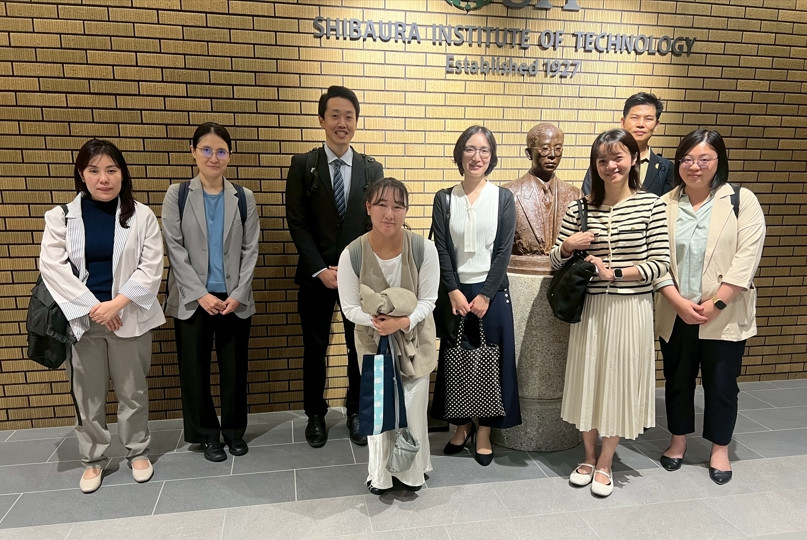
During the on-site activities, the interns first visited the Shibaura Institute of Technology, where they observed an institutional accreditation site visit. Through participation in committee meeting observations, institutional briefings, interviews with faculty, students, and other stakeholders, as well as campus facility tours, the interns gained close insight into how Japanese universities present their educational missions, learning outcomes, and quality improvement processes in a highly structured manner. The experience also enhanced their understanding of evidence-based quality assurance culture and the professional division of labor among review panel members.
The interns subsequently visited Teikyo University to observe program accreditation for a graduate program in public health. Compared with institutional evaluation, program accreditation places greater emphasis on curriculum design, learning outcomes, and the development of professional competencies. Through classroom observation and interviews with students and faculty members, the interns gained further understanding of how Japanese graduate programs integrate practice-oriented training with academic education and ensure that program quality aligns with societal and industry needs through accreditation mechanisms.
The itinerary also included a visit to the Japan Accreditation Board for Engineering Education (JABEE), where presentations and discussions highlighted how Japan’s engineering accreditation system aligns with international frameworks, emphasizing outcome-based education and the cultivation of professional engineering competencies. This visit broadened the interns’ understanding of different accreditation models and encouraged reflection on both the similarities and differences in quality assurance system design and implementation strategies across countries.
Overall, the 2025 International Internship Program provided not only valuable opportunities for practical observation but also a platform for in-depth exchange among quality assurance professionals across borders. TWAEA will continue to leverage international cooperation mechanisms to build institutional capacity, cultivate quality assurance professionals with a global perspective, and strengthen collaboration with international QA agencies, contributing to the continuous enhancement of higher education quality.
