-
Establish Broader
Perspective. Motivate Fundamental Innovation.
International Joint Accreditation Standards Project
Advancing Quality|Connecting Higher Education Across Borders
iJAS brings together professional quality assurance agencies from across Asia to provide international peer review, cross-border professional dialogue, and a developmental approach to institutional accreditation. Through this collaborative framework, higher education institutions can strengthen internal quality assurance, demonstrate their distinctive strengths, enhance international visibility, and respond proactively to digital transformation, artificial intelligence, sustainability, and the rapidly changing global higher education environment.
- Download iJAS Pamphlet
- Download iJAS Rules
- Download the 2026 School Handbook
- View Accreditation Results
About iJAS
The International Joint Accreditation Standards Project, or iJAS, is a cross-border higher education quality assurance initiative jointly launched in 2018 by the Taiwan Assessment and Evaluation Association (TWAEA) and the Japan University Accreditation Association (JUAA).
The partnership subsequently expanded to include the Office for National Education Standards and Quality Assessment (ONESQA) of Thailand, the Mongolian National Council for Education Accreditation (MNCEA), and the Center for Education Accreditation, Vietnam National University–Ho Chi Minh City (CEA VNU-HCM). Today, iJAS serves as a collaborative platform involving five quality assurance agencies across Asia.
Through document review and on-site review conducted by experts from different countries and higher education systems, iJAS helps institutions examine their educational quality, distinctive identity, and future direction from diverse international perspectives. The project also promotes mutual understanding among quality assurance agencies and creates opportunities for international benchmarking, professional exchange, shared learning, and continuous institutional enhancement.
Who May Apply?
Higher education institutions that have been duly established and authorized under the applicable laws and regulations of their respective countries or jurisdictions are eligible to apply for iJAS accreditation.
iJAS is particularly relevant to institutions that:
- regard internationalization and global engagement as strategic priorities;
- seek to strengthen educational quality through international peer review;
- are developing their internal quality assurance or institutional governance systems;
- wish to expand international partnerships and student or faculty mobility;
- are advancing sustainability, digital transformation, social responsibility, or international impact.
Institutions may first submit an inquiry to the iJAS Secretariat. The Secretariat will coordinate the accreditation schedule according to the institution's needs and assist the institution in understanding the accreditation framework, procedures, and necessary preparations.
iJAS Standards
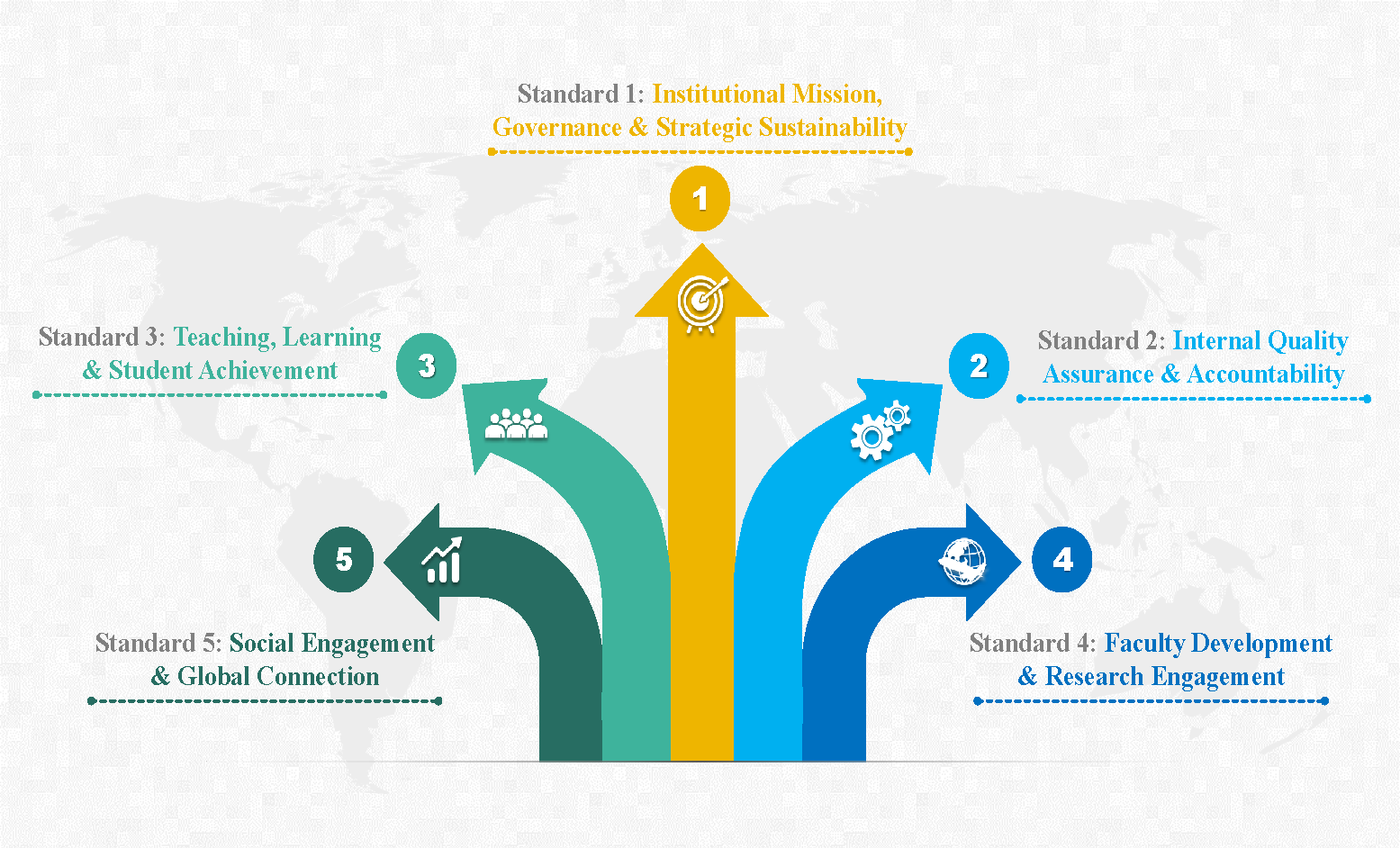
The iJAS accreditation framework comprises five standards and twenty-nine indicators. It provides an integrated, developmental, and future-oriented basis for evaluating institutional quality, effectiveness, and sustainability.
Accreditation Process
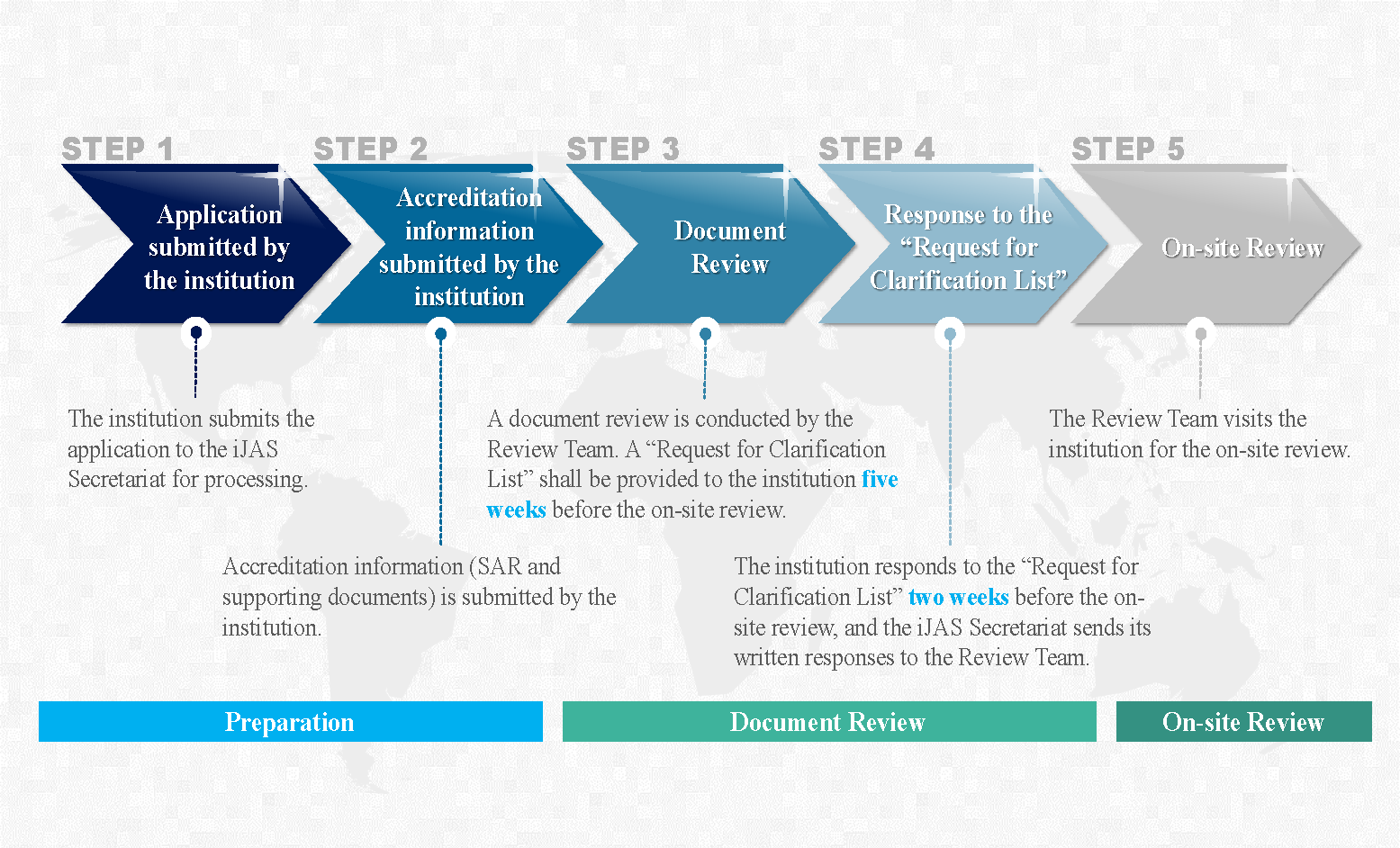
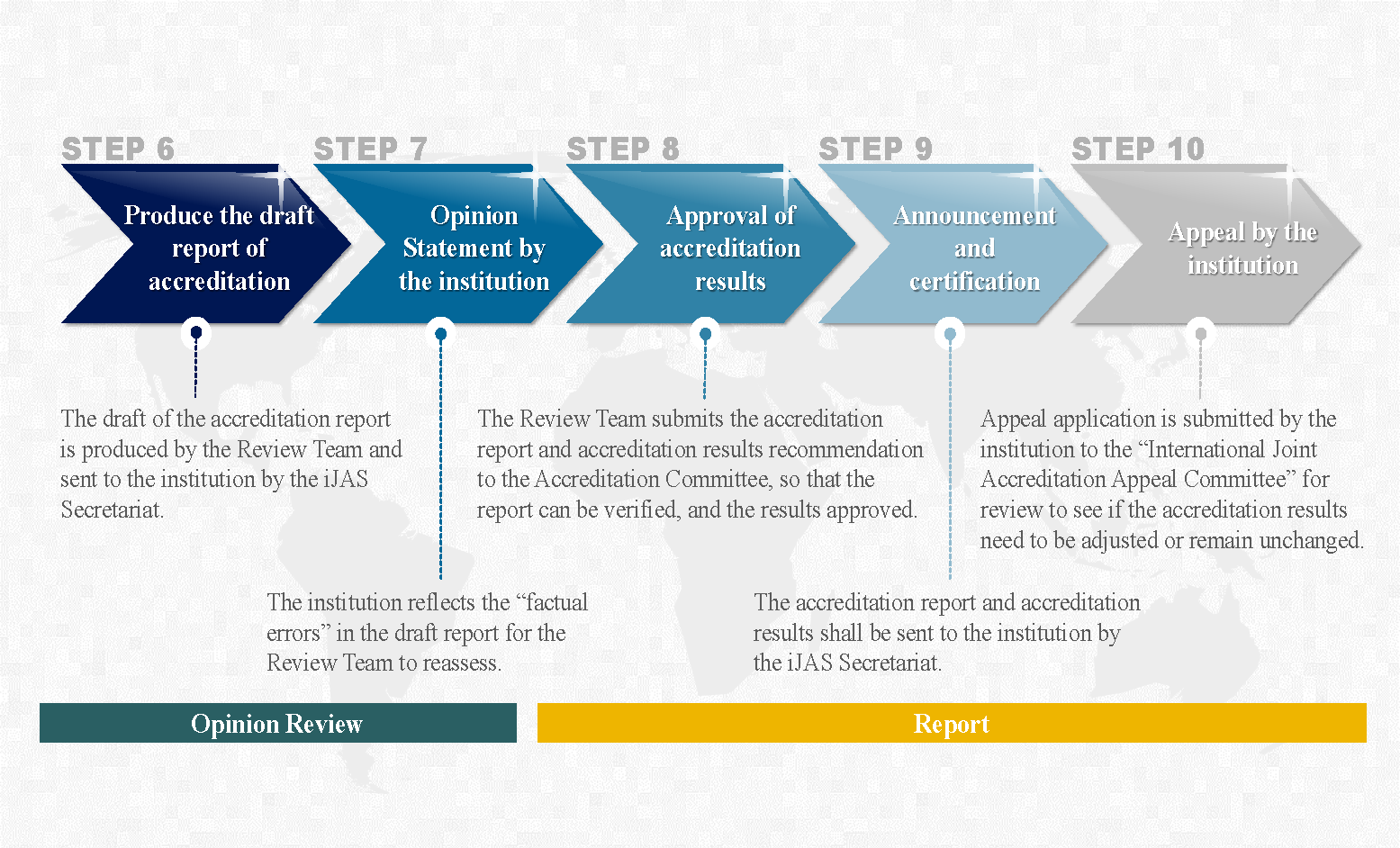
From the submission of a formal application to the iJAS Secretariat through to the confirmation of the accreditation result, the accreditation process generally takes approximately 12 months. However, the actual timeframe may vary depending on the circumstances of each case. Interested institutions are encouraged to contact the Secretariat so that an appropriate schedule can be planned to accommodate their needs.
Accreditation Results
iJAS accreditation results are classified as follows:
Accredited|valid for six years
The institution has demonstrated overall achievement of the International Joint Accreditation Standards, provided sufficient supporting evidence, and shown the capacity for continuous improvement and sustainable development.
Not Accredited
The institution has not yet sufficiently demonstrated achievement of its educational objectives or fulfillment of the fundamental requirements of the International Joint Accreditation Standards.
Institutions granted Accredited status receive an accreditation certificate in English. Upon request, an additional version may be issued in the official language used by the applicant institution.
Fees and On-Site Review Expenses
The review fee covers honoraria for members of the International Joint Accreditation Committee and Review Team, reviewer training, and the administrative, coordination, and management costs associated with the accreditation process.
International and local transportation, accommodation, meals, and other logistical expenses related to the on-site review are borne separately by the applicant institution. Throughout the process, the iJAS Secretariat serves as the principal liaison between the institution and the Review Team and assists in coordinating the on-site review arrangements.
Collaborative Quality Assurance Agencies
iJAS is jointly supported by five quality assurance agencies:
- Taiwan Assessment and Evaluation Association(TWAEA)
- Japan University Accreditation Association(JUAA)
- Office for National Education Standards and Quality Assessment(ONESQA)
- Mongolian National Council for Education Accreditation(MNCEA)
- Center for Education Accreditation, Vietnam National University–Ho Chi Minh City(CEA VNU-HCM)
The partner agencies collaborate in standards development, professional training, international joint accreditation, and the exchange of higher education quality assurance expertise and good practices.